Power of Culture Blog
Happy Arts & Humanities Month, Massachusetts!
Governor Healey and Lt. Governor Driscoll issue a proclamation recognizing October 2026 as Arts and Humanities Month

Bethann Steiner, Senior Director of Public Affairs
Updated – July 20, 2026: Great news! The state Senate is scheduled to debate its version of the Mass Wins Act economic development bond bill this week (S. 3178) and Section 10 of the bill is our proposal to ensure that all municipal cultural facilities are eligible to apply to the Cultural Facilities Fund (CFF) – regardless of age or size. Mass Cultural Council is thrilled to see an updated version of S. 2169 on the move in the Senate!
Updated – July 9, 2026: Last night the House of Representatives debated H. 5562, the Mass Wins Act economic development bond bill. Mass Cultural Council is very grateful to Rep. Steve Owens and the 41 House Members who co-sponsored Amendment 136 to reinsert the language to expand and clarify eligibility to the Cultural Facilities Fund to all municipal and tribal government owned cultural facilities. Unfortunately, this amendment was not adopted, but Mass Cultural Council will continue pushing for this policy change when the bond bill is debated by the Senate.
Updated – June 24, 2026: The Joint Committee on Economic Development & Emerging Technologies released their version of the Mass Wins Act this week – H. 5527. The bill is now before the Joint Committee on Bonding, Capital Expenditures & State Assets and a hearing has been scheduled for July 2, 2026 at 1pm. Unfortunately, H. 5527 no longer contains the CFF expanded eligibility language; Mass Cultural Council will continue to advocate for this policy change as the bill continues through the legislative review process.
Updated – May 5, 2026: Great news! Due to Mass Cultural Council’s advocacy, the Healey-Driscoll Administration included most of S. 2169 in its 2026 economic development bond bill, H. 5386, the Mass Wins Act! Due to a drafting error, Tribal facilities were omitted from Section 7 of the bill. Mass Cultural Council deeply appreciates the Administration for embracing this access proposal and for clarifying the error; we will work with the Administration and legislative leaders to amend the section so that both municipal and Tribal government-owned cultural facilities are eligible to apply to the Fund.
Updated – November 11, 2025: Great news! S. 2169 received a favorable report from the State Administration & Regulatory Oversight Committee and advanced to a secondary committee, the Senate Committee on Ways & Means, for additional consideration. Mass Cultural Council will continue its advocacy on this matter and provide updates as they are available.
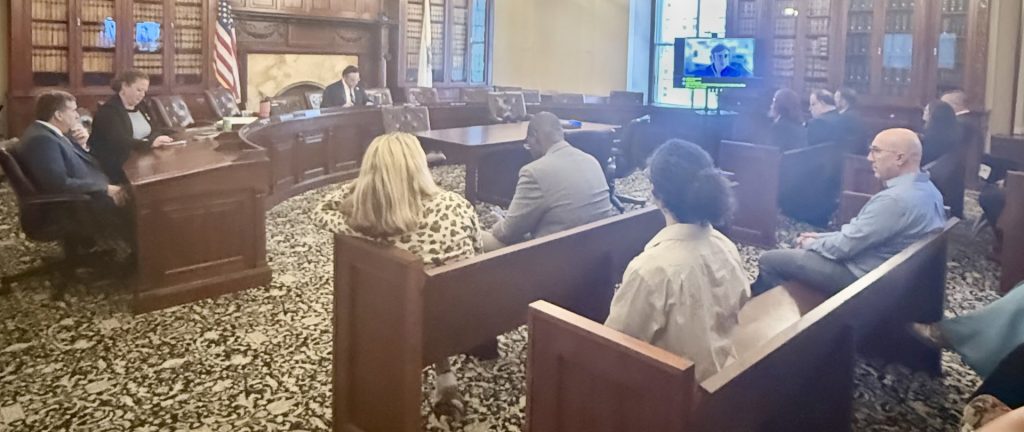
Last week Mass Cultural Council testified at the State House during a public hearing convened by the Joint Committee on State Administration and Regulatory Oversight in favor of S. 2169, An Act clarifying eligibility to the Massachusetts cultural facilities fund.
Filed by state Senator Paul Mark, co-chair of the Joint Committee on Tourism, Arts and Cultural Development, this bill proposes a narrow technical amendment to the enabling legislation for the Cultural Facilities Fund (CFF), and makes it clear that all nonprofit, municipal, and tribal cultural facilities are eligible applicants to the Fund.
The CFF, created by the Legislature in 2006, is a capital grant program co-administered by Mass Cultural Council and MassDevelopment. Its purpose is simple: to invest in cultural facilities across the Commonwealth, boosting jobs, tourism, and community vitality. Since its inception, the Fund has awarded $180 million to more than 1,600 projects, employing tens of thousands of architects, contractors, and construction workers, and helping cultural organizations create over 3,000 new jobs.
Unfortunately, the current law limits eligibility for municipally owned facilities to buildings that are either very large or very old. This has forced us to turn away strong projects from communities like Tolland, Leverett, Revere, New Bedford, and others—simply because the facilities don’t meet an arbitrary size or age requirement. Likewise, several tribal facilities have been denied because the law does not clearly state they are eligible.
S. 2169 offers a narrow but important fix. It removes the size and age restrictions for municipal facilities and clarifies that tribal facilities may apply. This amendment ensures the Fund works as intended: supporting all nonprofit, municipal, and tribal cultural facilities, regardless of whether they are housed in a 125-year-old building or a brand-new pavilion.
Mass Cultural Council believes this is a matter of equity, access, and good public policy. It will particularly benefit smaller communities, rural towns, and tribal nations. We have previously written about this proposal on the blog.
Thank you to our bill sponsor Sen. Mark, as well as the co-sponsors who added their names in support of S. 2169, Senators Comerford, Brady and Eldridge and Representatives LeBoeuf, Kerans, Sena, and Moakley. Lastly, note with appreciation our partners in administering the CFF program, MassDevelopment, for their counsel in this matter.
Advocacy Action Alert: