Power of Culture Blog
Opportunities & Resources for Orgs – Nov 26
A monthly round-up of grants, technical assistance resources, and opportunities for cultural organizations

Jay Paget, Program Director
Since 2006, Mass Cultural Council has been committed to supporting the development of vibrant creative spaces through technical assistance and the Cultural Facilities Fund. The Agency’s statewide perspective lets us see creative space trends in geographically distant communities with similar stories.
Our series on Adapting Public Buildings for Creative Uses has highlighted municipal buildings that evolved into community art centers:
Now we turn to another kind of building that anchors nearly every community: houses of worship.
In some communities, congregations have dwindled and their capacity to maintain the space has diminished. Yet these marvelous historic buildings are still intact, serving as beautiful community assets but with evidence of deferred maintenance. In these same communities, artists and cultural organizations struggle to find affordable space that can accommodate their programmatic visions where high ceilings, open floor plans, and audience-friendly spaces may be just what they need. Churches have all three.
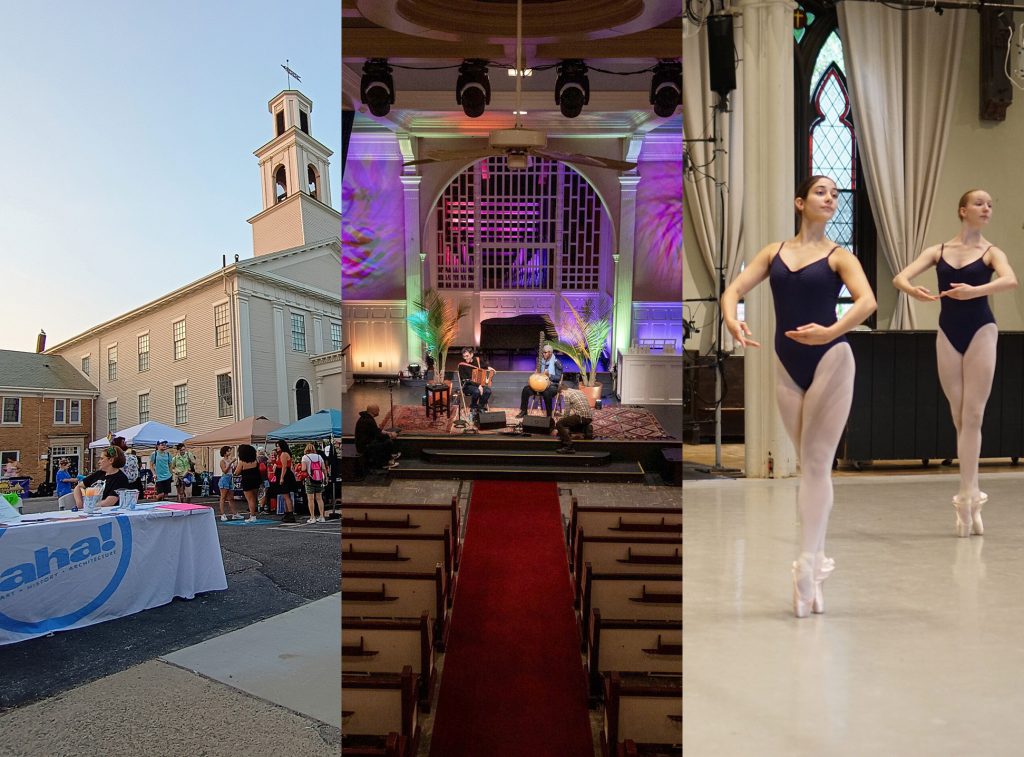
This most recent case study, Adapting Houses of Worship for Creative Uses, documents three Massachusetts instances where the original congregation still worships in the building, but arts organizations have taken on the primary stewardship role. The arts entity is now either the owner or under a long-term lease agreement and has assumed legal responsibility for the space.
The evolution to co-habitation is the central focus of this case study. As always, a combination of factors sets the stage for preservation and adaptive reuse of space.
Listen to the José Mateo Ballet Theatre Interview >>
Listen to the Bombyx Interview >>
Listen to the Steeple Playhouse Interview >>
This case study walks step by step through how each deal came together: the building assessments, zoning and code changes, financing, and the patient relationship-building with each congregation. Common lessons run through all three: call an architect first; find champions inside both the arts organization and religious community; learn what funding works; and plan for the work to take longer than you expect.
These case studies are part of Creative Space DNA, a peer network of practitioners led by Mass Cultural Council and the ArtStaysHere Coalition. Each month, people who have preserved, developed, advocated for and operated creative spaces share what they have learned so others don’t have to reinvent the wheel.