Power of Culture Blog
Happy Arts & Humanities Month, Massachusetts!
Governor Healey and Lt. Governor Driscoll issue a proclamation recognizing October 2026 as Arts and Humanities Month

Erik Holmgren, Senior Director, Strategy & Partnerships
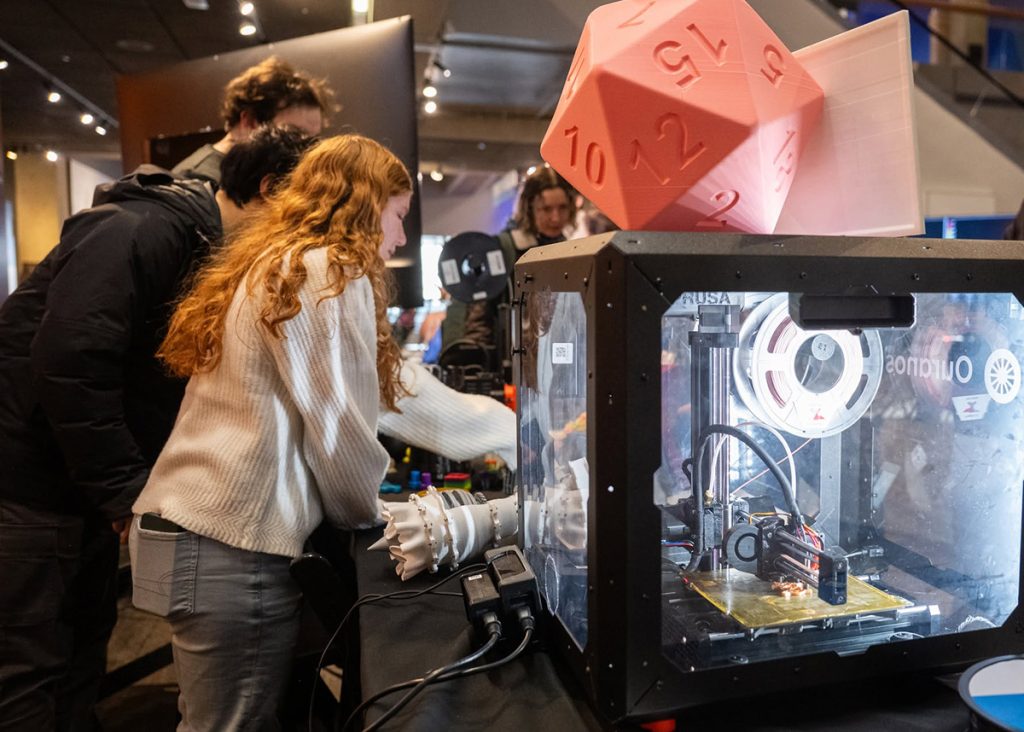
Massachusetts is known for two things that don’t always appear in the same sentence: a world-class cultural sector and a world-class STEM (Science, Technology, Engineering, and Mathematics) ecosystem.
Mass Cultural Council sees this as a paradox: two of the Commonwealth’s greatest strengths are often operating in parallel, not in concert.
That’s the challenge a new STEAM Subcommittee is taking on. Convened under the Massachusetts STEM Advisory Council and chaired by Mass Cultural Council, this panel brings together leaders from state agencies, education, business, public health, and the cultural sector.
Its goal is to make formal, research-backed recommendations on integrating the arts and creativity to drive the STEM and innovation economy across the Commonwealth.
The evidence, and the urgency for bridging these two sectors, is already being built. The World Economic Forum’s 2023 Future of Jobs Survey found that employers now rank creativity above analytical thinking as the skill they most want.
Business research points the same way. Deloitte links creativity to business growth, and a Wall Street Journal piece notes that high-growth brands tend to have the mindset and processes to let creativity flourish. An IBM study of 1,500 executives concluded that handling an increasingly complex world will take creativity.
The picture in education is similar. Based on a STEM to STEAM literature review and Creativity and STEM Industry literature review Mass Cultural Council assembled for the STEAM Subcommittee, extensive research points to arts learning supporting critical thinking, problem-solving, and innovation. The skills that matter for success in STEM.
For those of us who work in the arts, this is unsurprising, but for people in other sectors this may be new information. The arts and creativity are too often understood as having its roots in talent.
Creativity and the arts are not about talent, they are about opportunity. Creativity is a muscle; it needs to be developed.
The most creative people in the world are those who had the opportunity to practice their creativity in their educational, personal, and/or professional experiences. They were not necessarily the most talented.
The STEAM Subcommittee’s initial recommendations fall into three areas:
The group is now testing the feasibility of each recommendation, with formal recommendations going to the STEM Advisory Council in January 2027.
The initial exploration of feasibility reveals something that is not a surprise to anyone who lives or works in Massachusetts: We have all the infrastructure, people, and desire to continue to lead in education, the arts, and innovation.
The STEAM Subcommittee has identified existing spaces in the fields of education, the arts, and industry to facilitate the implementation of these recommendations – such as established educator professional development series, ongoing STEAM programming, and industry associations.
We recognize that positioning creativity to be a driver of STEM and the innovation economy holds an inherent tension within it.
Through the work of this Subcommittee we are not suggesting that the arts exist in service of industry.
Connecting arts and creativity to STEM and the innovation economy is about expanding opportunities for creative individuals at every stage of their careers, should they choose to pursue them, while recognizing the inherent value their perspectives and practices bring to innovation. In doing so, Massachusetts can strengthen both its cultural sector and its position as an international leader in innovation.
Through our strategic partnerships, Mass Cultural Council is working to position the cultural sector as a partner in solving real-world problems across sectors. This includes aligning education policy with the state’s innovation economy and encouraging educational and employment pathways that value artistic and creative training.