Power of Culture Blog
On Using A.I. in Grant Applications
We value the human voice and encourage you to use it in Mass Cultural Council funding requests

Käthe Swaback, Program Officer
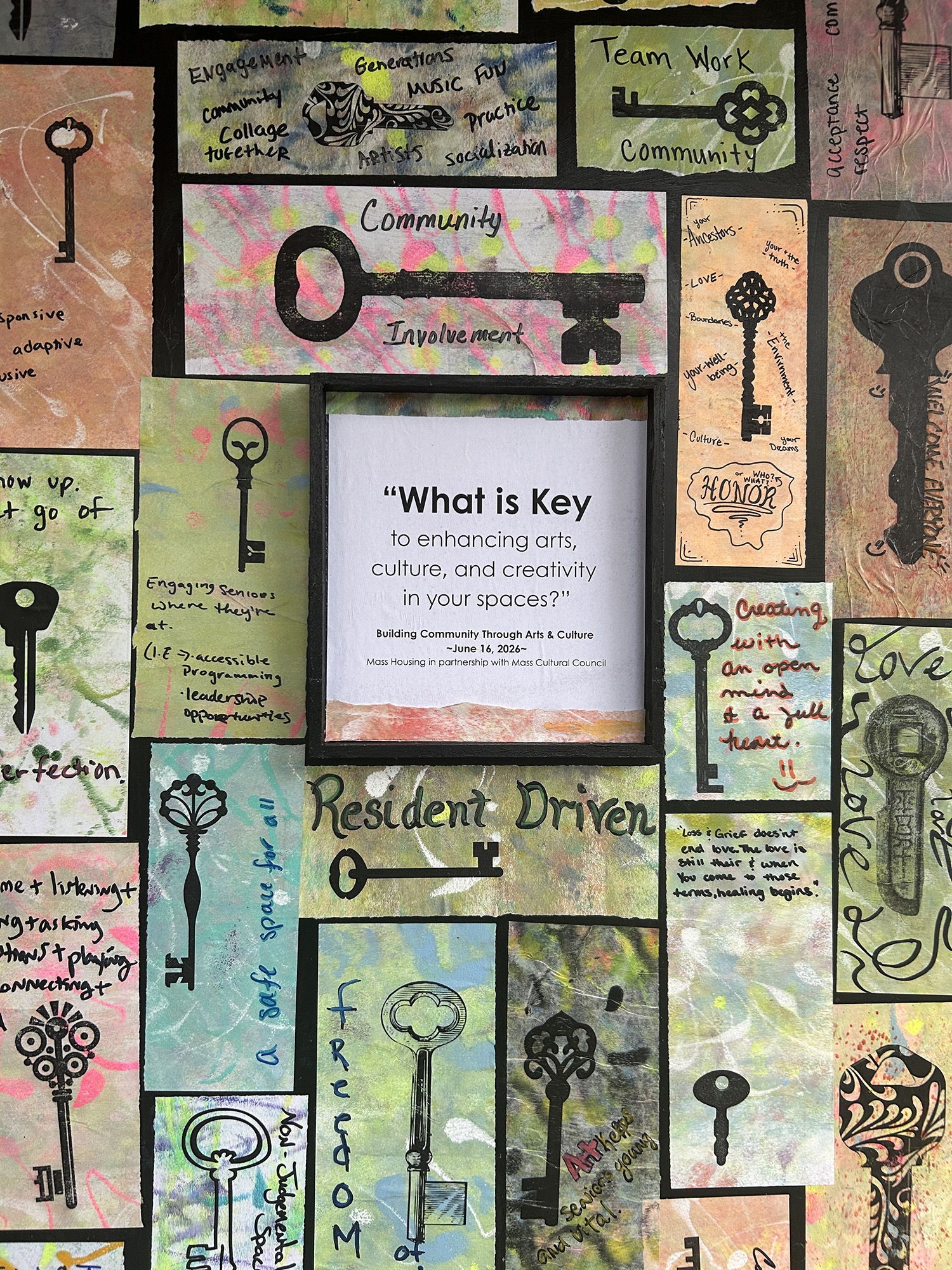
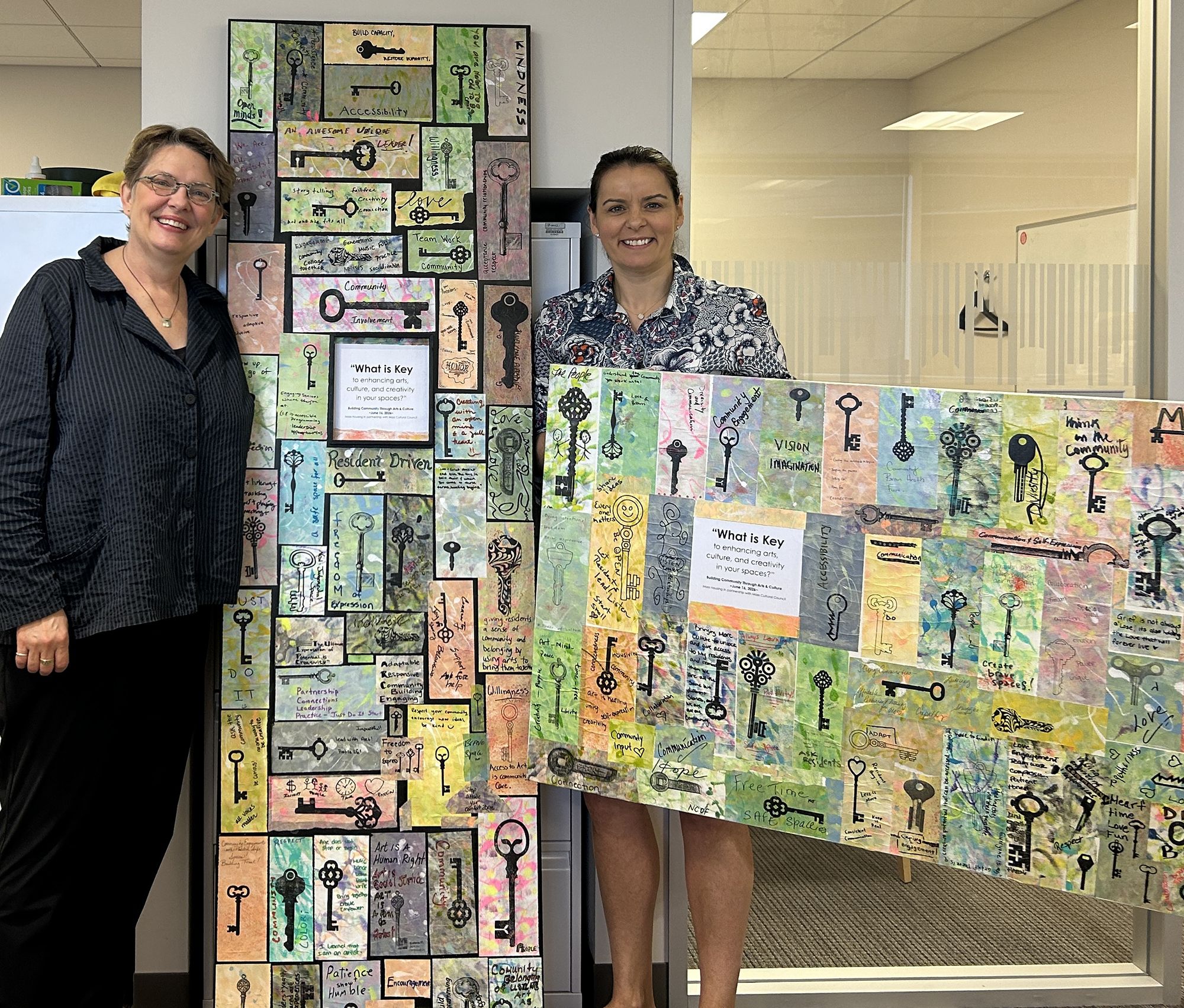
As part of our work with MassHousing and their “Building Community Through Arts and Culture” conference this summer, Mass Cultural Council led an art-making activity with a goal of identifying how we could all collectively support Massachusetts residents and communities.
The resident services coordinators and housing staff who attended the conference not only gained strategies, insights, and connections to integrate cultural programming intentionally into affordable and public housing settings. They also were able to offer their own insights and advice for the effective use of the arts in their spaces.
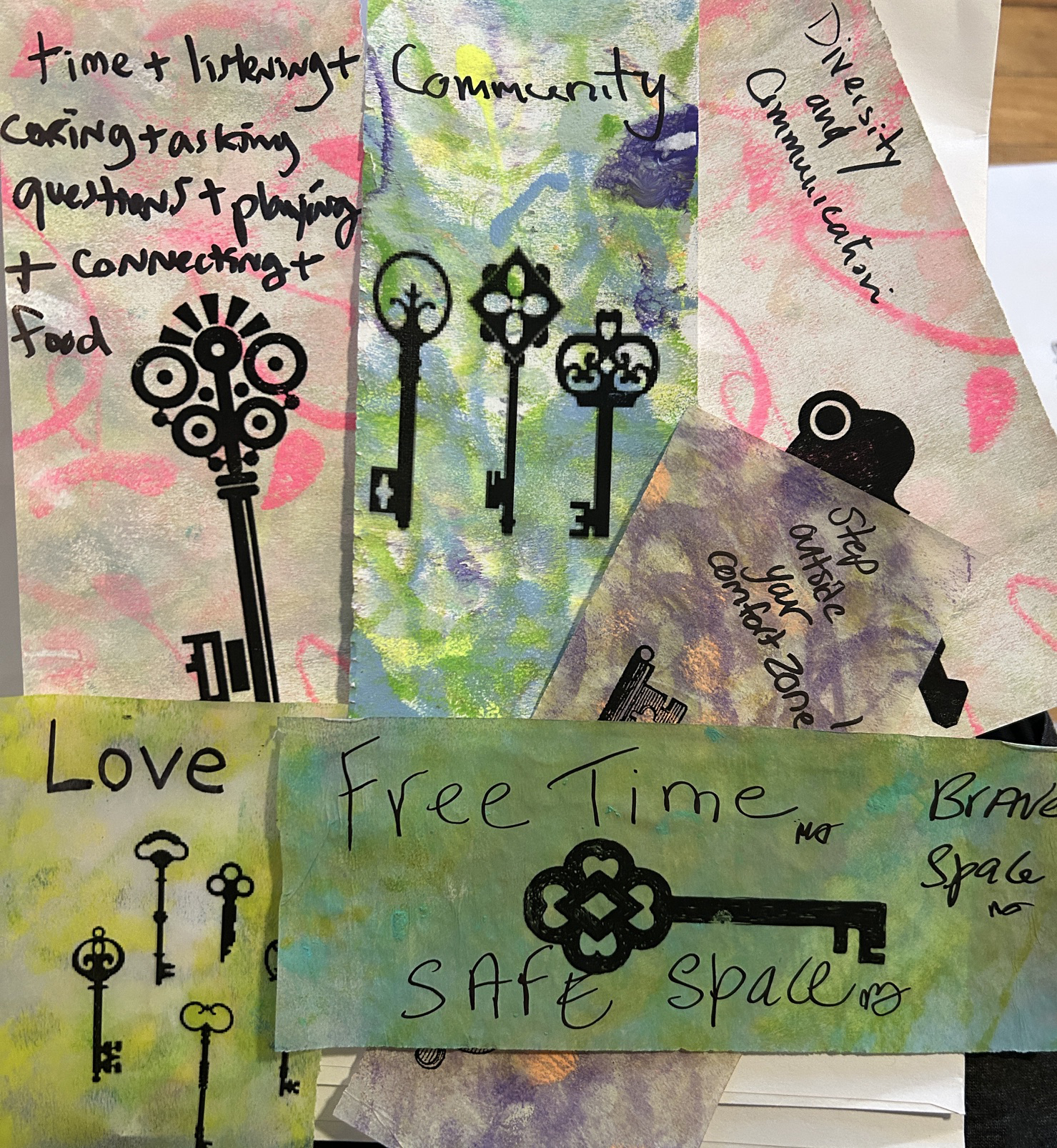
As part of our art-making activity, conference attendees were asked to choose from a variety of hand-painted papers with printed keys on them. On those slips they wrote a response to the following question:
What is key to enhancing arts, culture, and creativity in your spaces?
Across more than 150 responses, some themes surfaced:
These themes echo the findings of a 2024 study examining ways in which arts and cultural strategies operate across various social determinants of health like housing.
The study’s framework identifies evidence supporting the effects of arts and culture on outcomes such as:
Similarly, participants in the conference spoke about a myriad of ways they felt that arts and culture can play important roles in health when there is dedicated and co-created time and space in public housing for the arts and for residents to engage with its positive outcomes.
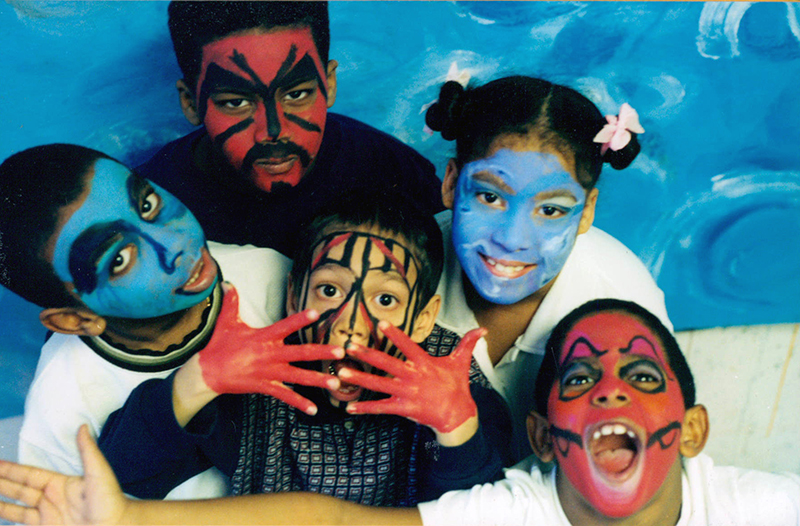
Aware of how social isolation poses health risks in both older adults and young people, MassHousing conference participants shared how community art projects can decrease feelings of loneliness and depression through the increase of residents feeling a sense of belonging through art making with a group.
They said successful programs are achieved when facilitators can prioritize active listening and relationship-building. Taking time to listen and ask questions in a creative environment shows care, curiosity, and commitment.
Acceptance and connection are gained when leaders ask questions instead of assuming needs. Participants noted that housing “invests in people” when they invest in creative play in environments that build trust, reduce isolation, increase mutual support and community networks.
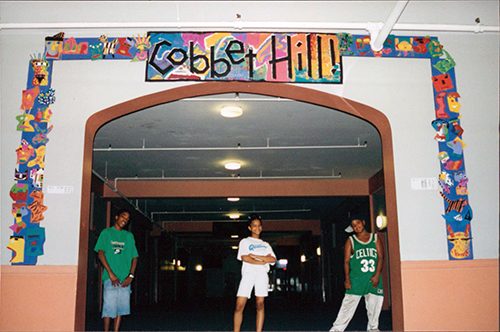
A beautiful example of this was shared earlier in the conference program through a slide show marking a 20+ year partnership between Raw Art Works (RAW) and the Cobbet Hill housing development. (There have been many ways in which arts-based strategies and programs help to bolster youth mental health, especially when young people can continue with programs over years.
A former Cobbet Hill resident, Diana, spoke directly to the impact that the arts and RAW had in her childhood while at Cobbet Hill, 25 years ago:
“I will never forget how you all showed up for me. I will always harbor immense gratitude towards you. I think right now, with the dark political climate we’re in, I often find myself thinking – I wish we could heal the world much like how Raw Arts healed a part of me.”
Diana is now working in the industrial design field in California.
In the 2026 book, Art Cure: The Science of How the Arts Save Lives, Dr. Daisy Fancourt looks at the science of how the arts can transform our health. There she notes that regular arts and cultural engagement – often as little as 1/2 hour a week can measurably improve mental and physical well-being. Creative activities can lower stress hormones, reduce physical pain, and ease anxiety, which also can make regular participation more possible.
MassHousing conference participants noted that key to the success of programs are strong leaders able to create brave and accessible spaces where creativity can flourish without fear.
Accessibility is vital. This includes providing accessible programming, cultivating leadership opportunities, and ensuring there is enough time for creative expression.
Facilitating “brave spaces” includes helping individuals feel supported enough to step outside their comfort zones and collaborate freely.
Creating “judgment-free zones” and “nonjudgmental spaces” happen when people can “let go of perfection” and get in touch with their own identities, emotions, and concerns while building a trusted community where they can share them.
Responses also included that effective leaders must be willing to step back and share power to, “let residents lead and listen.”
This “resident driven” approach includes “sharing your cultural foods with others, being accepting to other cultures, being appreciative of different forms of art.”
Getting residents to “buy in” can help turn residents into stakeholders and may involve projects that honor aspects of cultures or people who they feel have played strong important roles in their communities’ history.
They said good leadership includes supporting residents of every age to see themselves as artists by nourishing their creative potential.
Workshop presenters at MassHousing’s conference spoke to how community-based art-making in housing developments can create a shared culture with a sense of ownership, pride, connection, and beauty in the lives of residents.
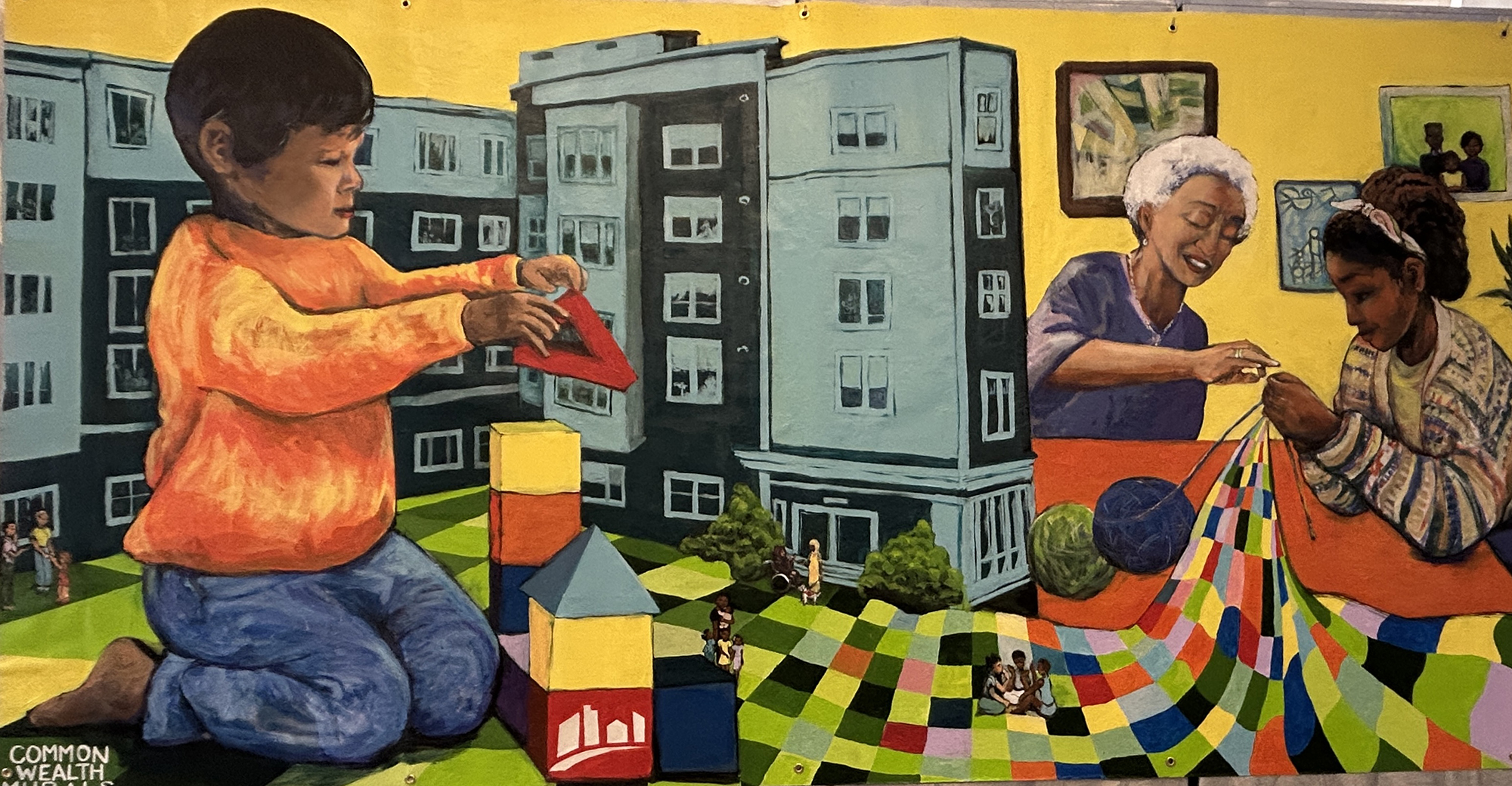
Common Wealth Murals offered the chance for all attendees to experience that directly by participating in art making during the conference.
That finished mural was unveiled at MassHousing’s office in September with the following description:
“The sketch shows creativity as part of everyday life at home within a multifamily community. One child builds a playground and another, assisted by her grandmother, is knitting the literal “fabric of community”.
Research from the University of Pennsylvania speaks to how “cultural resources are integral to a neighborhood ecology that promotes social wellbeing.”
Lower-income communities with higher concentrations of cultural and artistic resources experience lower rates of crime and improved overall safety.
Integrating arts programming and public art within public housing spaces offers communities creative opportunities to not only beautify neglected spaces, but also to help individuals feel seen, heard, and honored – increasing their civic pride, improving residents’ mental health, social connections, and overall well-being.
Living spaces that feature public art and creative placemaking have been shown to reduce anxiety and make communities safer for all.
Youth-led projects can help transform spaces and build an “enhanced sense of community, as well as physical and psychological well-being.”
To support these “quality of life” benefits, strategic and operational advice was also offered by participants as key to building art programs:
One participant wrote, “Continue to raise money to bring arts to help with healing so we can (help) change our residents’ trauma to triumph!”
“A key takeaway was that arts should not be viewed as an optional amenity but as an essential component of healthy, thriving communities. Creative expression fosters belonging, resilience, and opportunities for residents to build meaningful relationships.”
– Resident Service Coordinator, MassHousing’s conference feedback survey.
“Ultimately, advancing health isn’t just about individual change; nor is it about improving the healthcare and wellness sectors alone. Advancing health requires transforming the many environments and conditions that affect our health. It involves imagining what kind of world — community, system, society, environment — people need in order to be well, and then working to build that world, at every level.”
– Dr. Tasha Golden
MassHousing is continuing to invest in arts and culture with the goal of supporting resident well-being and strengthening community. They will be offering round two of their Creative Placemaking Grants with applications opening in late fall 2026.
While those grants are not available to artists directly (applicants must be a housing site), MassHousing and Mass Cultural Council are interested in helping connect housing sites with artists. Contact Käthe Swaback – with ‘housing’ in the subject line – to flag your interest in being connected.
Housing developments, artists, nonprofits, and creative businesses looking to find or showcase experience in leading workshops, creating murals, or otherwise engaging with residents in affordable housing, be sure to check out CreativeGround, a dynamic regional directory that celebrates the vital work of New England’s creative people and places.