Power of Culture Blog
LCC Grants Available for Community-Based Arts & Culture Projects
$5.85M in funding available for public projects such as field trips, library events, lectures, festivals, exhibits, and dance performances

Erik Holmgren, Manager of Advancement and Strategic Partnerships
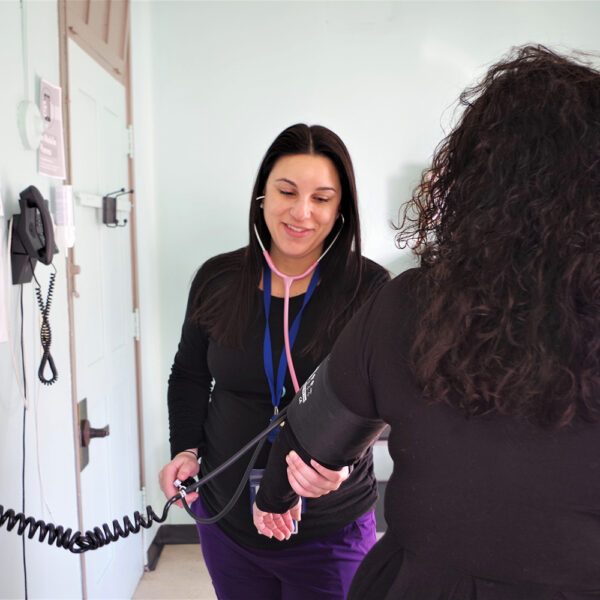
Last year Mass Cultural Council expanded our groundbreaking, state-wide Social Prescription Program with funding from the National Endowment for the Arts (NEA).
Three grants were awarded to Federally Qualified Health Centers across the Commonwealth to introduce arts prescriptions in their service offerings. These arts prescriptions provided patients the opportunity to receive 12 “doses” of arts and culture in place of, or in addition to, traditional treatment methods.
Massachusetts is the only place in the country with a statewide social prescription program and after six years of piloting the program there is significant evidence that it is an effective and cost-effective treatment option.
The NEA funds allowed SocialRx, a leading U.S. social prescribing delivery platform, to partner with NeighborHealth, Family Health Center of Worcester, and Fenway Community Health Center in connecting patients to arts and cultural experiences as part of their care.
The results, drawn from a reporting over the past six months, show that culture isn’t just a nice extra — it’s measurably improving mental health.
Across the three health centers, the program generated 108 patient referrals with striking improvements in well-being:
NeighborHealth Corporation (East Boston)
86% of members showed improved mental health and well-being after their most recent “dose” of a cultural experience, including 100% of members who had poor mental health at baseline.
Family Health Center of Worcester
78% of patients showed a reduction in behavioral health concerns, rising to 88% among patients who had elevated symptoms at intake. Patients rated their experiences an average of 8.9 out of 10.
Fenway Community Health Center (Boston)
69% of members reported improved mental health, 56% reported fewer behavioral health symptoms like depression and anxiety, and 56% reported less loneliness.
While numbers are a part of the story, patients’ experiences tell the rest.
At NeighborHealth, one member described a cultural event as “spectacular,” praising everything from the set design to the presentation. At Family Health Center of Worcester, patients commented, “Since I’ve been living here, this is the first time I’ve done something I enjoy.” Another shared, “I love it and laughed for the first time in a long time!”
For another patient, “Alex”, the experience turned into something bigger. The pottery studio was so taken with Alex’s work that they asked to feature it in their display and gave him a gift certificate to return with a friend. For Alex, the arts prescription wasn’t just a creative outlet, it was validation, connection, and a reason to come back.
At Fenway Community Health Center, patients described feeling instantly at ease. One said an event “felt very comfortable and natural, like I was among friends that I had known a long time,” and added, “I really wish I could go there every week.”
Across all three participating health centers, providers noted that arts prescriptions opened up new kinds of conversations with patients — about creativity, community, and what wellness really means beyond the clinical visit.
For patients who often face financial and transportation barriers to cultural experiences, these prescriptions offered something talk therapy alone can’t: joy, self-expression, and a renewed sense of community.
Like states across the country, Massachusetts is confronting a growing shortage of healthcare workers.
In 2025, the Healey-Driscoll administration invested $25 million in scholarships for behavioral health graduates to help strengthen that workforce.
“Our communities are stronger when residents can access behavioral health care, and that means we need to build a strong talent pipeline,” said Lieutenant Governor Kim Driscoll.
Given what we know about the health benefits of cultural participation, the arts and culture sector is poised to be seen as an untapped behavioral health workforce across the Commonwealth, drawing on thousands of cultural organizations and experiences that support the mental and behavioral health needs of residents.
We believe cultural participation should be part of a strong cross-sectoral approach to whole-person health. The Agency’s arts and health work is focused on partnerships and leveraging the state’s existing cultural infrastructure to meet the public and individual health needs of people in every Massachusetts community.
As these health centers look to build on this first year of offering arts prescriptions, the message from patients and providers alike is that “culture is care”, and it’s working.