
Partner with Local Artists
Tips for Working with Visual Artists
Here are some practical steps to guide you through the process of building a successful partnership with local artists.
With thoughtful planning and clear communication, those partnerships can enrich your space, support local creatives, and enhance the experience you offer every guest.
Things to Consider
Ask yourself: Is there an amount of time I’m willing to commit to this idea? What is my budget limit?
Some ideas, like periodic exhibitions from artists whose work is on sale, may take more time but have a lower budget requirement. Other ideas, like hiring a curator, will take up less of your time but will mean a higher cost.
Before you even begin to think through the other aspects, consider what the balance of time and money is that you’d like to put toward this project.
As you begin to explore the idea of bringing visual art into your spaces, consider the variety of ways you can work with local artists:
- Incorporate an artist’s vision from the beginning. If you’ve got a new venture, bring local artists into the early conceptual, design, and/or build-out phases. Their work and ideas can help establish a brand identity, atmosphere, and customer experience that’s more integrated and “homegrown” at launch.
- Temporary, rotating exhibits of paintings, photographs, and other artwork. This involves planning and a continuing schedule of tasks, but has the benefit of keeping your space fresh and engaging.
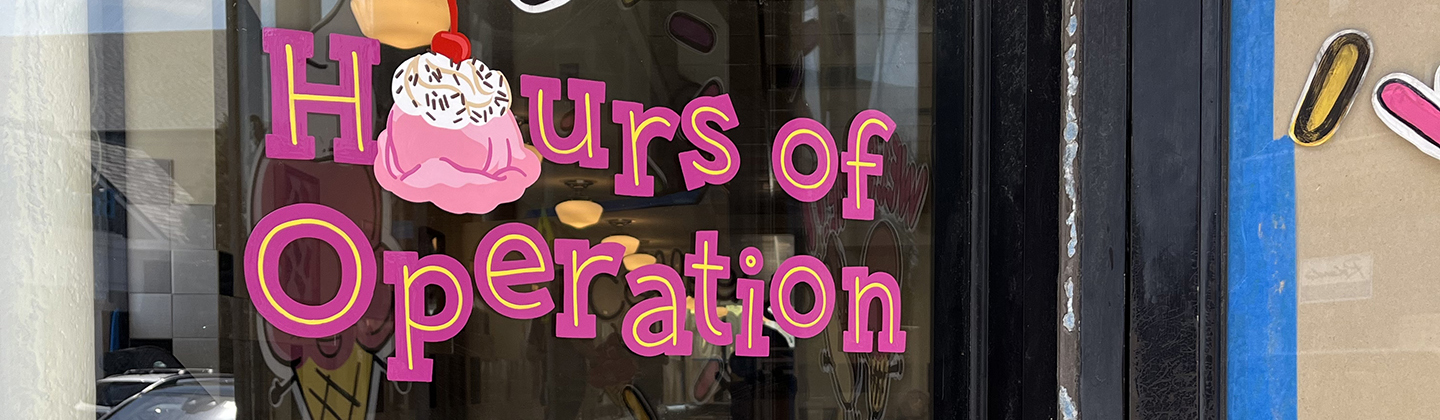
- Activating empty windows can get the attention of the community.
- Purchase or commission (meaning specially created to your requirements) visual art for permanent or semi-permanent viewing. This requires up-front attention and costs but once the art is purchased and installed, you’re done.
- Host artists to do workshops or presentations in your space. Events like this can stand alone or accompany/augment either of the first two options.
- Participate in “gallery nights” and open studios. Many communities market open studios events once or even multiple times per year. Connect/sign up for events in your community to get on their shared calendar/marketing.
- Create an artist-in-residence program. Along with exhibiting an artist’s work, can you provide them work space and/or a more intentional, ongoing partnership?
- Host “pop up” artist/artisan markets.
As you consider which type of artist partnership might work best in your space or spaces, keep in mind that there’s no wrong answer. Each partnership you undertake will help make the next one more likely to connect with your community and your needs.
Once you’ve got a general idea of the type of arts partnership you’d like to pursue, start thinking about when, where, and how. For instance, if you plan on rotating exhibitions, decide on frequency, like four exhibitions per year, once every two months, etc.
From there, you can build out a schedule that includes:
- Artist selection process (recommend launching this process at least four months before anticipated exhibition start)
- Working out an agreement between you/your space and the artist
- Installation of work
- Duration of exhibition
- Planning for related events (if any)
- Marketing/Outreach
- Deinstallation of work/Cleanup
If your project is new, expect your plan to go through refinements as you discover what works best for your space and your community.
Once your plan is in place, there are numerous ways to find local visual artists:
- Find visual artists using CreativeGround.org, a dynamic regional directory of New England artists of many disciplines.
- Contact your Local Cultural Council (LCC): Every city or town in Massachusetts is represented by a Local Cultural Council committed to supporting local arts and culture. Find your LCC and ask for help in finding local artists.
- Consider partnering with a local arts organization. For example, the Langham Hotel works with the Copley Society of Art in Boston to offer exhibitions of local artists.
- Studio Buildings and Maker Spaces: Does your city or town hold community-wide “open studio” events? Take the time to attend the next one, to see work in person and meet artists in their element. If you begin to exhibit work at your business, keep in mind you can join local open studios groups to become another stop in an open studios event or local studios tour.
- Hire a curator (you can list the job on our employment site, HireCulture.org!). Some businesses, like Cambridge Common, work with an individual curator to display rotating solo exhibitions by local artists. Any curator should be compensated fairly, and this will impact the cost of your partnership. But the benefits are many, including a high level of professionalism and a unique vision.
- Social Media and Online Portfolios: Use location-based hashtags (e.g. #BostonArtist or #BerkshireArt) on platforms like Instagram to discover emerging talent.
- Call for Art: For larger projects like murals or permanent installations, consider posting a formal “Call for Art” on your website or social media. Read our guide to writing a call to artists, and be sure to include your budget, the dimensions of the space, and your desired timeline.
You’ve found an artist and you’ve got a plan. Here are some basics on exhibiting visual art:
- Who is installing? You? Your staff? There are companies that specialize in art installation. Or the artist may be able to suggest someone they’ve worked with.
- Hanging system or wall space. If you’re installing hooks, make sure they are weight-rated for heavy frames. Alternately, you could invest in a gallery-style rail or cable system to avoid damaging walls with repeated drilling.
- Lighting that highlights the work (ambient or directional). Natural light is great when possible but avoid placing delicate works, like watercolors, in direct sunlight.
- Labels or artist info cards — adds professionalism and boosts sales.
- Train staff. Be sure to talk to your staff about taking care with or near works of original art.
A successful partnership is built on clear expectations. While these agreements don’t always need to be overly complex, having a written “Memorandum of Understanding” (MOU) or contract protects both your business and the artist. Key points to include are:
- Contract Basics: Read an article about the basics of an artist contract from our colleagues at the New York Foundation for the Arts. The organization Working Artists and the Greater Economy has a contract generator tool.
- Insurance: Clarify who is responsible for insurance while the art is on your premises. Most business liability policies can be adjusted to cover temporary exhibitions.
- Commission and Sales: If the art is for sale, agree on the percentage the business will take (if any) and how the transaction will be handled.
- Promotion Rights: Ensure you have the artist’s permission to use photos of the artwork in your marketing, social media, and website to promote the partnership.
- Compensation: If the artist is participating in any events in your space, compensate them for their time.
A key value of bringing art into your business is the connection it creates with your guests and neighbors. There are numerous things you can do to “set the stage” for a strong community connection:
- Launch Events: Host an “Artist Reception” or “Opening Night” with special menu items or live music to draw a crowd.
- Storytelling: Place small labels or “artist statements” near the work. Guests in the hospitality industry love knowing the story behind what they are seeing; it turns a meal or a stay into a memorable experience.
- Digital Engagement: Feature the artist in your email newsletters or “behind-the-scenes” videos of the installation process. Tag the artist in your posts to tap into their follower base as well.
Image credits: Work samples included in the “Dig Into” graphic above came from artist profiles on CreativeGround.org (left-to-right):
Row 1: Deanne Joy, James Dwyer, Dave Custodio Artisinal Studio
Row 2: Ben Marder, Kouzza, Dani Schmidt
Row 3: Adrien Bisson, Kurt Hanss, Miki Lovett
Row 4: Jane Hudson, Golden Lion Photography, Caoin O’Durgy
Row 5: Hilary Zelson, Emily Cobb, Ben Jundanian