Power of Culture Blog
Unlocking Arts & Culture Benefits in Housing
MassHousing conference surfaces the keys to enhancing arts, culture, and creativity in their spaces

Erik Holmgren, Manager of Advancement and Strategic Partnerships
The primary driver of a sustainable social prescription program is for cultural organizations to be paid for the therapeutic value they provide for individuals.
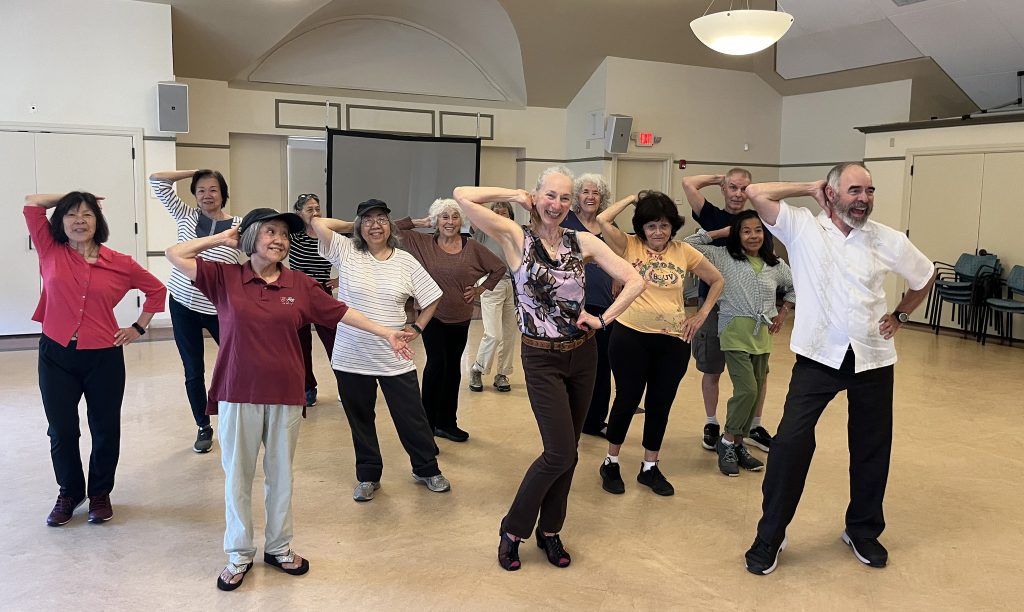
In March of 2020, at the start of the COVID-19 Pandemic, Mass Cultural Council launched the first Social Prescription Pilot in the United States with eight cultural organizations and two medical providers in Western Massachusetts.
Through the first three years of that pilot, we expanded statewide and, by the end:
As a state arts agency we typically fund programs and do not operate them.
After a year-long search we entered a partnership with Art Pharmacy to scale social prescription programs across the Commonwealth.
In 2023, in partnership with Art Pharmacy, we launched the first statewide social prescription program in the United States. Through this partnership, we have identified three key roles that state arts agencies can play as partners in scaling social prescription programs statewide:
Resource Development
As a funder, state arts agencies (SAA) have unique relationships with other funders, providing them access to spaces that typical businesses and nonprofits don’t have.
This invites an opportunity for collaboration with other philanthropic partners to expand impact across a state. This can take the form of public-private partnerships and partnerships with other public agencies that often have grant programs and dollars that are larger than what SAAs can provide.
Network Development
Network development is probably the most natural fit for supporting social prescription at a state level. State arts agencies have deep relationships with arts and cultural organizations as well as artists and teaching artists.
Making these organizations and creatives aware of the existence of a social prescription program and connecting them to an Arts Prescription provider, like Art Pharmacy, provides a benefit to the organizations through the creation of a new revenue stream and provides a benefit to patients who have the opportunity to experience the arts as part of their treatment plan.
Business Development
Philanthropy in social prescription is a catalyst, not a sustaining force. The primary driver of a sustainable social prescription program is for cultural organizations to be paid for the therapeutic value they provide for individuals.
As a state arts agency, we also have access to other state agencies that provide funding in different ways than we do. Typically, an arts funder is a piece of a broader funding puzzle that an organization pieces together.
In other public sectors, government agencies contract with organizations to pay for services as a whole. In Massachusetts, we currently have the Department of Public Health and the Opioid Relief Fund paying for social prescriptions and are in conversation with entities ranging from municipalities to gaming to the Department of Homeland Security.
In addition to public agencies a state arts agency can also support with private sector business development by being in rooms with the business community.
In Massachusetts, the creative sector accounts for more than 4% of the state’s economy, about the same size as the retail industry, but doesn’t often find itself in conversation with the business community.
By allocating staff time to attend business association and networking meetings, primarily in the health space, we have an opportunity to build partnerships with managed care plans, health plans, benefits providers, life insurance, and other potential payers for whom social prescriptions can add value to their business.
Doing the work of supporting a statewide arts prescription program does not necessarily mean bringing on new staff or consultants.
The first two – Network Development and Resource Development – are pieces of work that state arts agencies are often involved in already.
Business Development is often the new skill that an agency needs to develop and it focuses on utilizing staff time to be used in new spaces and building new partnerships.
State arts agencies typically know their sector very well, but getting to know a new sector – or other public agencies – can be challenging.
Here are some simple ways to start business development work that we have utilized at Mass Cultural Council:
To reiterate: Philanthropy is a catalyst for social prescription, not a sustaining force. The goal of this work is for arts and cultural organizations to BE PAID for the therapeutic benefit they provide as a part of clients’ treatment plans.
The work of raising awareness and advocating for social prescription can feel like a lot for staff. It goes a step beyond grantmaking and looks at broader change for our field. As state arts agencies, we know our field, we work to make our grant making impactful and equitable AND we can work to expand resources for our field through this work.
In February 2026, the Agency is proud to present at the National Assembly of State Arts Agency’s Hearts of Practice convening, aimed at building knowledge and strengthening the practices of state and jurisdictional arts agency (SAA) and regional arts organization (RAO) staff at the intersection of the arts and health.